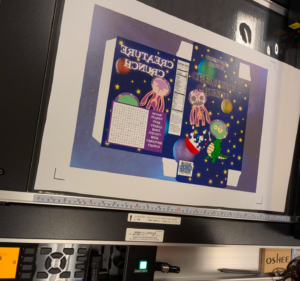
Traditionally the industry has encompassed many segments such as general commercial printing, quick printing, digital imaging, magazines, newspapers, books, display graphics, financial and legal printing, screen printing, labels and tags, packaging, greeting cards, and trade and finishing services. (These are encompassed by NAICS code group 323). With the technological changes and broadening scope of services provided by companies in the field today, the graphic communications industry has expanded to include creative design, retail display design, e-commerce, web page design and hosting, mailing, fulfillment, and a host of services that provide horizontal marketing well beyond the core printing model.

We help the world communicate across a wide range of platforms. Ideas are created on the computer and carried through to a variety of platforms that can include the internet as well as printed forms of many types and variations. These can range from personalized digital imaging to high volume conventional printing to graphics on the side of a bus. Many graphic communication jobs are high tech, high skill, high paying, creative, and innovative. They cover a wide range of positions from professional and managerial, to administrative, sales, and job planning through production positions operating machines.

Graphic communication companies are entrepreneurial and innovative. They range from small companies with a few employees to large plants with several hundred people on multiple shifts. They have modern computerized equipment and stay current with technology changes taking place in the field. Most offer competitive benefits packages and compensation plans. All offer a solid career in a stable industry.
Graphic communications is America’s most geographically dispersed manufacturing industry and is a major force in the economy of nearly every state. Every state has at least 100 facilities, 1000 employees, and over $140 million in production. The average state has over 500 companies totaling 10,000 employees with over $1.8 billion in shipments. You can go virtually anywhere in the country and get a job working in the graphic communications profession. Almost all printing and imaging that is consumed in the United States is produced in the U.S. and the industry exports billions of dollars of products to other countries. In fact, the U.S. graphics industry is projected to remain a strong domestic-based manufacturing industry for the foreseeable future.